What We Offer
Specialized Therapy for Every Child
At Fundamentals Speech & Language, therapy is individualized to each child's strengths, needs, and goals. Our approach supports children in becoming confident communicators and successful learners.

Speech & Language Therapy
Expressive Language
Helping children build vocabulary, form sentences, and express their thoughts and ideas.
Receptive Language
Improving a child's ability to understand spoken language, follow directions, and process information.
Articulation
Targeting specific speech sounds to help children communicate clearly and be better understood by others.
Phonology
Targeting phonological patterns that impact speech intelligibility to help children communicate more clearly.
Social Communication
Supporting pragmatic language skills — turn-taking, conversation, and reading social cues.
Early Language Development
Early intervention for toddlers and preschoolers showing signs of language delay.
Dyslexia & Reading Support
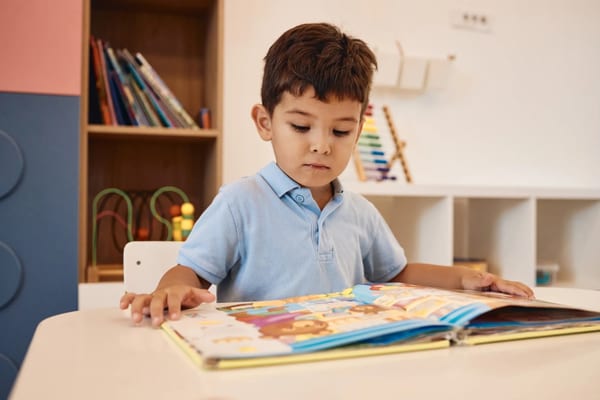
Dyslexia Screening & Support
Screening for signs of dyslexia and providing targeted, structured intervention to build reading skills.
Phonological Awareness
Building the foundational sound skills (blending, segementing, etc.) that underpin reading and spelling success.
Decoding & Word Recognition
Teaching systematic phonics and decoding strategies so children learn to read.
Reading Fluency
Developing the speed and accuracy that allows children to read with ease.
Reading Comprehension
Strategies for understanding, remembering, and engaging with what children read.
Spelling & Written Language
Connecting reading and writing through structured spelling instruction and writing support.

Executive Function Skills
Planning & Organization
Teaching children how to break tasks into steps, organize materials, and approach assignments strategically.
Working Memory
Strengthening the ability to hold and use information in mind while completing tasks.
Attention
Practical strategies to improve sustained attention and reduce distractibility in learning environments.
Flexible Thinking
Helping children adapt to changes, shift between tasks, and approach problems from various perspectives.
Self-Regulation
Building emotional and behavioral regulation skills that support learning and social communication.
Time Management
Developing awareness of time and strategies for managing homework, routines, and deadlines.
Screenings and Comprehensive Evaluations
Screenings are brief assessments that help identify whether a child is having diffculties with speech and/or language. They help determine whether a comprehensive evaluation is recommended to further assess the child's communication needs.
Comprehensive evaluations provide a more in-depth look of a child's speech and language skills. If deemed necessary and age-appropriate, a child's literacy and executive functioning skills may be assessed as part of a comprehensive evaluation.
Evaluations may include:
- Parent and/or teacher questionnaires
- Clinical observations
- Standardized assessments
- Language samples
- Informal and criterion-referenced assessments
- Review of relevant developmental or educational information
- A comprehensive written report summarizing results, findings, and recommendations